SkeletonCR 1/4 · Medium Undead · Stat Block & Encounter Builder
Thirteen hit points, obeys literally, and folds the moment someone brings a mace.
The card
Stat Block
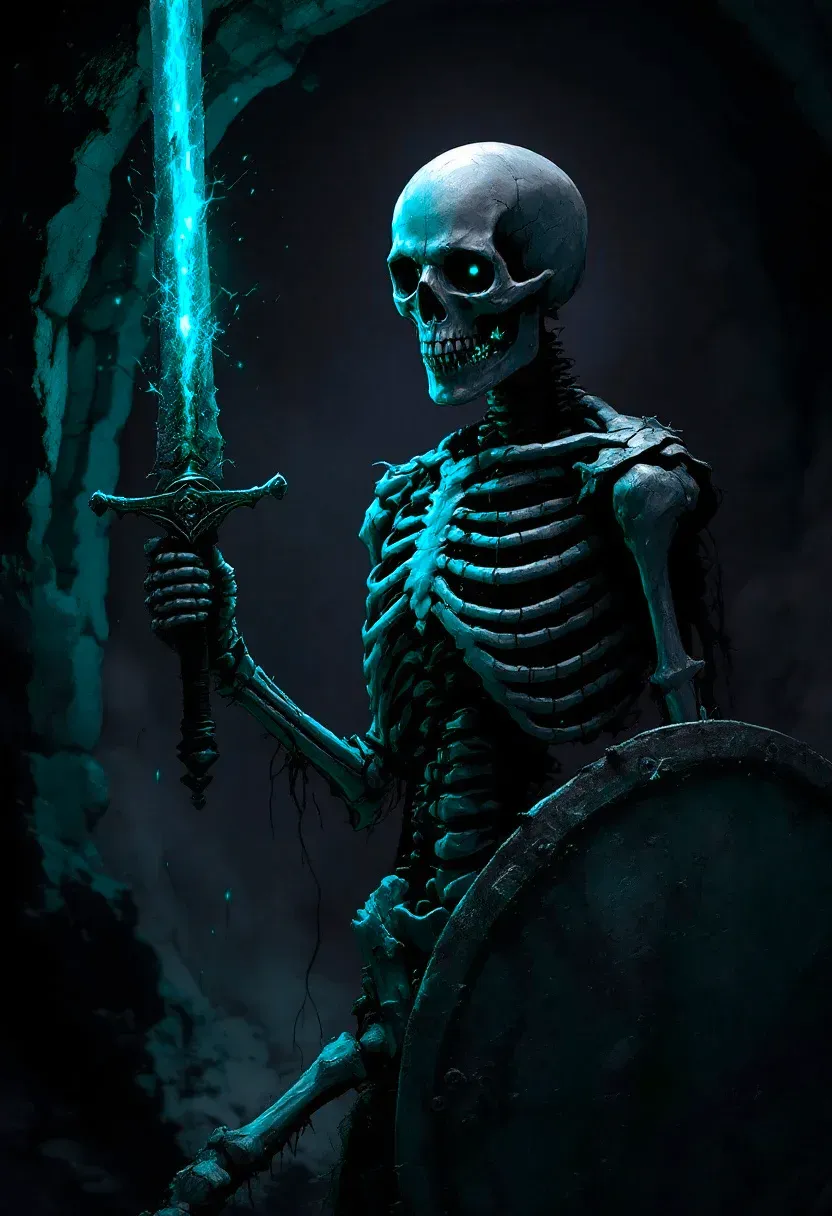
Medium Undead · Lawful Evil
Skeleton
2d8 + 4 · 30 ft. · AC from armor scraps
Darkvision 60 ft., passive Perception 9
Languages: understands all languages it spoke in life but can't speak
| STR | DEX | CON | INT | WIS | CHA |
|---|---|---|---|---|---|
| 10 (+0) | 14 (+2) | 15 (+2) | 6 (-2) | 8 (-1) | 5 (-3) |
Traits
Actions
How to actually run it
Tactics
The stat block tells you what it can do. This tells you what to do with it.
Pitch the fight
Encounter Difficulty
Encounter Builder
How bad is this fight?
Real DMG maths — XP thresholds by level, and the group multiplier that makes crowds so much worse than the raw total suggests.
They will win without spending much. Good for pacing between real fights.
Difficulty
Easy
400 adj. XP · ×2
deadly at 1,600
Pre-filled · you press Generate
Nearby in the bestiary
Related Monsters
Same challenge rating, or same kind of thing.


Counsel
Skeleton, Answered
What CR is a skeleton?
Challenge 1/4, worth 50 XP — the same as a goblin, but tougher (13 hit points) and less clever. Skeletons are the default low-level undead for crypts and necromancers.
What are skeletons vulnerable to?
Bludgeoning damage — maces, warhammers and quarterstaffs deal double. They are immune to poison damage, the poisoned condition, and exhaustion.
How do you use skeletons well?
In numbers, with archers at the back, and against a party without a bludgeoning weapon. They cannot improvise, so give them simple standing orders and let the players exploit that.
Who can create skeletons?
Animate Dead (3rd level, wizard and cleric) raises them, and the Oathbreaker paladin and Death Domain cleric command them. They are the default minion for any necromancer NPC.
Put It On The Table
Set your party, read the difficulty, and build the encounter around it. Your first is free.
Build an encounter